At the All Levels Class before Open Mat, we learned guard passing from Headquarters. And then the head instructor showed us a fun technique called the Rotolo roll, named after the (in)famous Rotolo brothers.
Headquarters, or as I like to call it now: HQ or Command Centre or Base of Operations, is now my new favourite guard passing position. It seems safe and it has many options to pass from there. I have to remember to stay flat on my feet instead of on the balls of my feet, because I don’t want to be put off balance.
________
A two stripe blue belt said I got the better of him today, that was a surprise. I rolled well against a seasoned purple belt, he doesn’t talk much but after we rolled I said “amazing job on the Octopus stuff,” he smiled. Another purple belt, a big one, said I had good defence, he also submitted me with a nasty arm bar.
Learned that one of my favourite training partners, who has been out for ten weeks already, will be out for another six months because he injured two discs in his back, I hope he finds his way back to the mats before then and drops in to say hi now and then. I also bid farewell to another fellow blue belt who is moving to the big city.
Life can get busy and shit happens, like injuries, but hopefully we all get to roll again another time.
The All Levels class was fun and the Open Mat after was great. A good combo.
I’m wearing my favourite Gi. A Hayabusa Ultra Lightweight Stealth, colour blue. Always wearing blue.
At the All Levels class, we practiced Octopus Guard. I love this guard.
At open mat, I sparred well with a heavy white belt. He said I had good “little moves”, he said he would like to roll that way some day.
A fellow blue belt said my technique is getting good. That put a smile on my face.
Purple belt I rolled with that is a bit lighter weight than me, seemed slightly gassed after our roll. I think I did good, considering he had amazing technique.
I didn’t get submitted which is a win for me. I think I’m getting better. All signs point to YES.
In the basement of a small yoga studio, there were six people ready to fight each other. There were mats taped on the wall and different coloured mats on the floor all patched together to create a feeling of a (literal) underground martial arts tournament.
My wife came with me. She was a great coach, manager, and cheerleader.
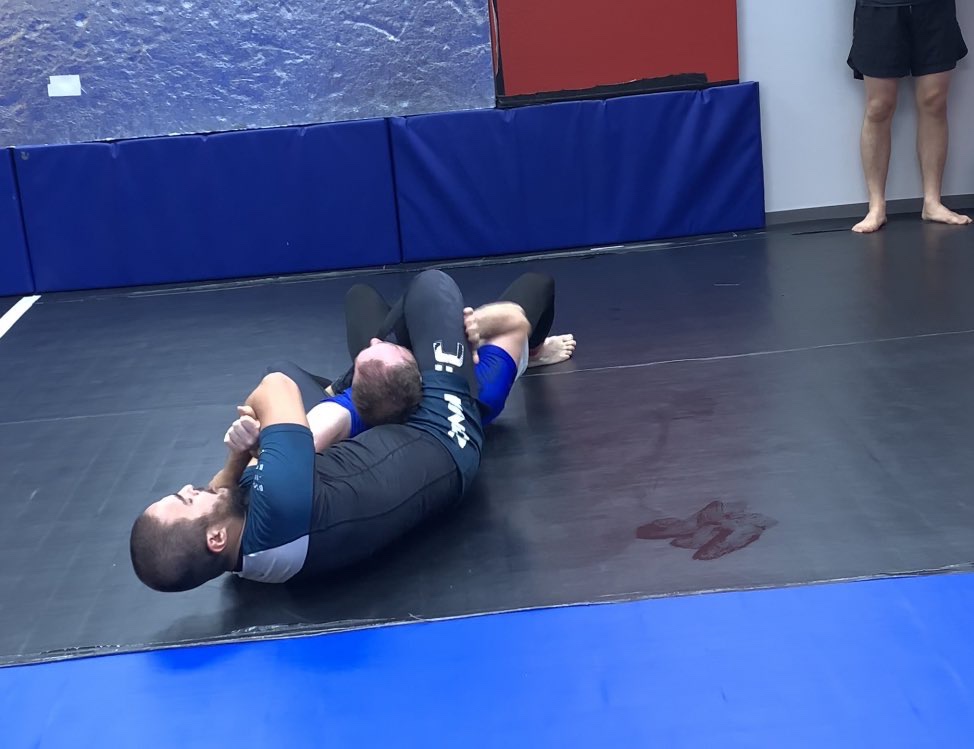
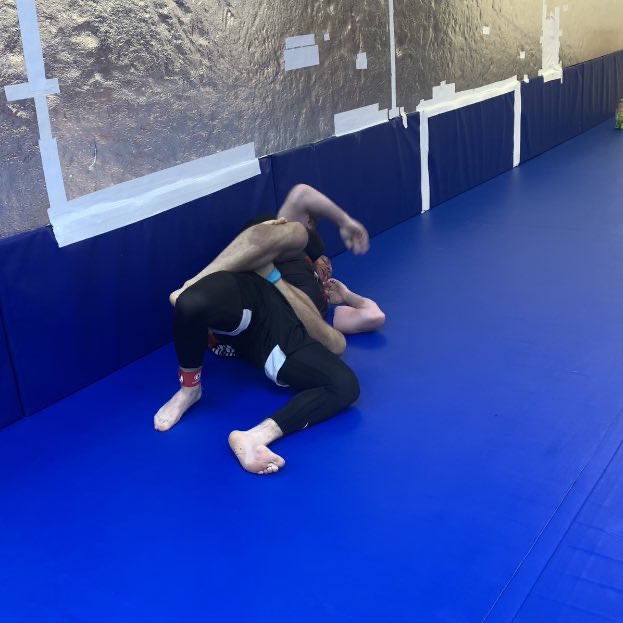
I won one match my walk-over (which means my opponent didn’t show up so it’s basically a participation win) and lost four matches by submission; an arm bar, a rear naked choke, a straight ankle lock, and a D’Arce choke.
Put your hand up if you want to see some pictures of me getting submitted?
Wow that’s a lot of hands. OK the people have spoken, here you go:
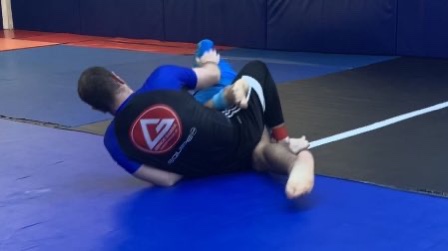
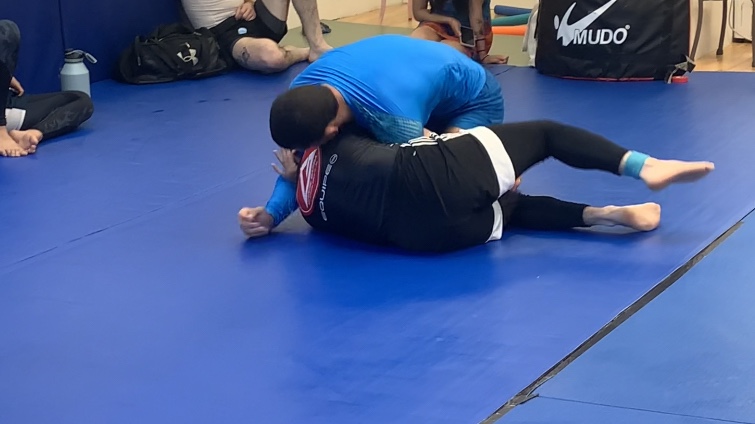
Arm bar with a beautiful triangle just in case. A deep rear naked choke. Throat still hurts.He got me with an ankle lock and 22 seconds. My fastest loss yet.I didn’t even see this D’Arce choke coming. He said he was a white belt but I think he’s full of shit.
It’s cool to see people, sharing photos of their wins, having their hands raised, and having the medals around their neck, standing in the middle of the podium.
But more people should show pictures of themselves getting submitted. It shows a side of BJJ that people need to see. The struggle. The growth. The journey. Not to mention it’s also kind of funny.
So what did I learn from this submission only tournament?
I learned I need better cardio. I felt better after the second and third and fourth match. But the first one as soon as I touched the guy I knew it was gonna be a tough match. He felt stronger and I felt gassed really soon into the match.
I learned I need to work on standing hand-fighting and pummeling. I was out matched when it came to hand-fighting and trying to get under hooks or over hooks. My head got pushed around a lot.
I learned I need to just make a move. I was hesitant on trying to do a takedown, although I had many opportunities to do a double leg and finish a single leg, but for some reason I gave up too soon. Perhaps my fear of injury had something to do with it. Basically, I need to learn to attack more often and just go for it.
Overall it was a good experience. Looking to do another comp in October in my city. Better start training now.
When I first signed up for jiujitsu, I was quite intimidated. Yes I used to grapple and wrestle in high school for six years, and I knew what it was like rolling around the mat with other people. But seeing all the different belt ranks made me feel inadequate. I thought I was out a place, like I didn’t belong. One time it actually happened pretty recently. Last week I went to a GB3 black belt and competition class. This class has blue, purple, brown, and some black belts in it. I definitely felt out of place. They were doing techniques I’ve never done before, and they also all had camaraderie that was built up over many years of knowing each other. I knew a few people in there but I’m not super close with them. At 37 years old I actually felt a little shy for the first time in a long time, the last time was probably when I went to my first jiujitsu class.
Dealing with the fear: what exactly are you afraid of?Think long and hard and heavy on what exactly it is that makes you not want to sign up. Hey, maybe you’re not interested and that’s OK a lot of people aren’t. But if you are interested in signing up for a bjj class then do some research, ask around on social media, check out YouTube videos, or drop in to a gym and ask a bunch of questions, or you could even email or message a gym on FB. That’s exactly what I did, I reached out to the gym I’m currently with and asked about free trial sessions. I bet some anxiety and stress from fear could be alleviated if you simply had your questions answered.
Wearing a Gi
Putting on a gi for the first time feels weird. I certainly didn’t feel as cool as I thought I would, like those martial artists in all those movies I watched growing up. “Everyone else looks better than I do” is what I often thought. Gi’s can be heavy, uncomfortable, and basically not fit well. Months in to my jiujitsu journey I didn’t really feel comfortable wearing my gi. And I don’t mean physically comfortable I mean mentally comfortable. Perhaps during those first eight months I didn’t feel like I belonged in my gi or that I didn’t look cool in my gi. And now after over a year and a half in my jiujitsu journey, I definitely feel like a martial artist and that I look cool in my gi.
Dealing with the fear:what exactly are you afraid of? We want other people to like us and we want to feel comfortable in our own skin and feel confident about ourselves. Image is important to us. “What if they don’t like me or what if they make fun of me?” we might say to ourselves. But in reality , and I’m sure you’ve heard this before, most people are way too caught up in the intricacies of their own lives and the problems they have that they don’t think about you for too long. Most of the fear you have about what others think about you is all in your head. It’s taken me 37 years to finally realize that.
Training Skills
Even if you’ve been training a short period of time with jiujitsu, you know this all too well. Especially if you don’t have any grappling background or any athletic skills at all. Rolling around on mats with strangers trying to fight each other, in this case choking and limb locking, is such a trip. Our bodies were made to move, and if you’re able to, jiujitsu will feel weird. That’s why in the fundamentals class I go to, there is a focus on basic body movement, such as, rolling forwards and rolling backwards, hip escaping, butt scooting, and break falling. Even someone who’s uncoordinated, learning these basic body movements can help you feel more in tune with your body, so then you can eventually feel more in tune with your body while you’re fighting somebody. Jiujitsu has thousands of techniques, and I’m pretty sure there’s no person on planet earth that knows all of them. When you’re first learning this martial art, you will look silly, will look dumb, you will look uncool. But guess what, everybody does when they first start!
Dealing with the fear:what exactly are you afraid of? Chances are you’ve never been in a real fight before and that’s okay a lot of people haven’t. When I first tapped to a submission in my first class I was scared sh*tless. There I was thinking I’m a hot shot with my wrestling background, being choked like I’ve never been choked before. It was wild. Your body and mind will go into Fight or Flight or Freeze Modes. That’s normal. To deal with this particular fear. break it down into small pieces. Don’t rush yourself. Don’t expect to be tapping and submitting people right away. Start with the basics of moving your body properly for jiujitsu. Then once your body has adjusted to the new-norm, that is, you fighting every week by rolling around in positions that you’ve never been in, then you can really start to open up to the martial art.
Injury Prone
Since the first day I started my jiujitsu journey over a year and a half ago, there hasn’t been a week that went by that I wasn’t nursing some type of pain that was a direct result of training. I’ve been lucky I haven’t been out for longer than three weeks with an injury. All the injuries were due to me not rolling smart or safe. Nobody wants to hurt anyone else (unless they’re an idiot). Jiujitsu is interesting, you’re trying to submit your opponent but you don’t want to permanently incapacitate them or prevent them from functioning properly again, at least a good training partner doesn’t want to. I remember seeing a video on social media of a person becoming almost paralyzed because their training partner did some sort of jumping back take. Lots of people with lots of opinions about who was in the wrong. But for me, it was a stark reminder of how dangerous this sport can be. Just be careful.
Dealing with the fear:what exactly are you afraid of? I’m not gonna lie to you, jiujitsu can be dangerous. It’s a self-defence and it’s a sport. People get hurt and permanently injured and cannot come back for months or years or ever. Like I said, I’ve been lucky. I haven’t experienced a debilitating injury. I constantly renew an old shoulder injury, and a nagging back rib injury, but my activities of daily living or not inhibited. I can still do what I want. So how do we deal with this type of fear? Train smart and train safe. Use your fight or flight or freeze mode to your advantage, gain control of it and know how you react in survival situations in BJJ. For example, how would you react when you have a person who is eighty to a hundred pounds heavier than you sitting on top of your chest and possibly smothering your face? Or if someone has back control on you, and they slipped in a rear naked choke, and it’s getting tighter and tighter and tighter? The truth is, you won’t know until you’re in it.
The fear of being judged or being permanently injured may never go away, but you certainly can mitigate the effect it has on your life.
Talk to your fellow teammates and ask them how they deal with it.
Seek out support wherever you are lucky enough to have it.
Embrace and enjoy each of the small victories you have on the mats. You’ve earned them.
And the more you expose yourself to the trials and tribulations of the jiujitsu journey, the more you’ll be able to turn it into an adventure.
Manage the fear. It will take time, but it will get better and it will become easier.
You don’t have to feel vulnerable, weak, exposed, or helpless when it comes to your jiujitsu journey. With enough time and effort, you will instead feel secure, resilient, empowered, and prepared. So keep showing up and keep fighting.
May your sweeps be quick and your submissions be swift. See you on the mats.
First 4 minute round is Submission Only, second 4 minute round is for Points. If the competitors are still on tie, move to OT round. If there is still a tie after OT, then fighters will move onto modified EBI overtime
Competitors are not rewarded for farming points
Pulling guard results in a penalty point (unless going straight into a submission)
This is wild. Also no medals and no podium. This feels like an underground tournament to me, sort of like those old Jean Claude Van Damme films where he goes to a secret tournament and kicks butt, and I can’t wait to train and show ‘em what I got.
Thank goodness they have a 160lbs weight division because I didn’t want to drop to 155 or go up to compete at 170.
What is my training regime gonna look like?
Basically train on the mats as much as I can, be safe with it, do some strength training at the fitness gym, and get some time on the treadmill.
I did six hours of jiujitsu last week. I think I can take a few days off. And start going to no-gi and competiton classes next week. I have to be safe and smart with my training. I only know one leg lock: the straight ankle lock. So I can practice entries and finishes for that. And not to mention defending leg locks, which I have no clue how to do other than ‘don’t give them your leg’ but that’s a good start.
I also can’t wait for my new rash guard to show up:
It should arrive just in time for my sub only massacre coming up in June.
Wish me luck 💪
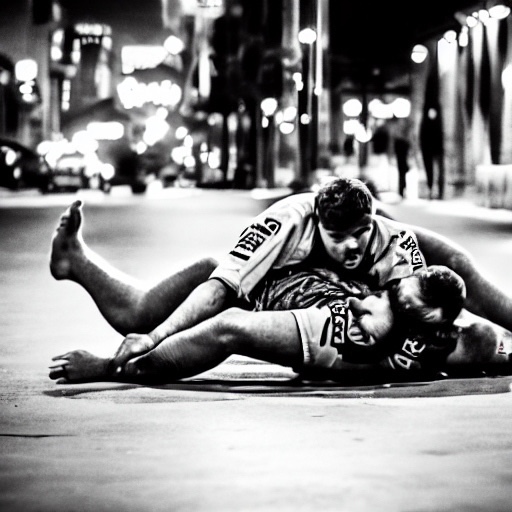
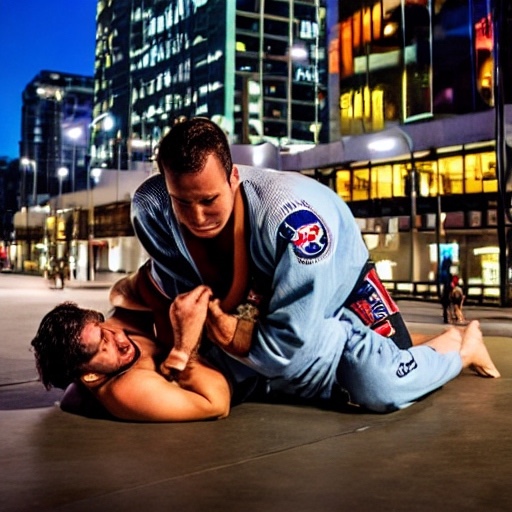
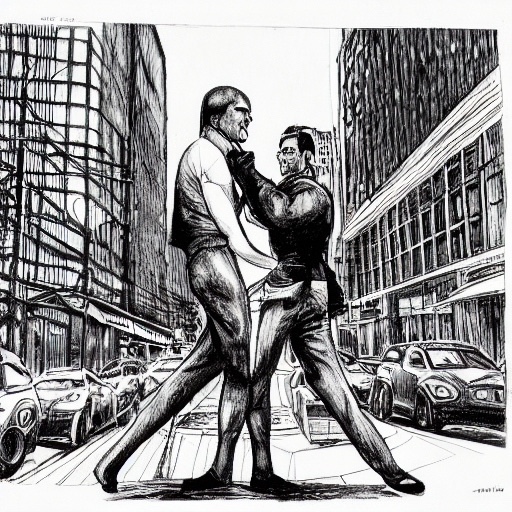
Here’s some AI text-to-image art, using the prompt: “City lights downtown bjj leg locks”
Congratulations! You are now a new BJJ blue belt. I bet you’re thinking, “now what?”
I recently wrote a post where I go into detail about what I am expecting myself to do now that I have a blue belt. You can read that here.
Today I want to share with you a book I am reading. It’s about your jiu jitsu journey and what you should be focusing on now that you are a blue belt, and what you can expect while you move up the belt ranks in BJJ.
Some of you may be thinking “why would I read a book about JiuJitsu instead of watching YouTube videos?“ Well you could watch a bunch of YouTube videos, they certainly do help supplement and expand on techniques you may be learning at your Academy. But to me, the pace and depth of reading a book about jiu jitsu feels more refined and meaningful.
A note before we get into it: listen to your coach or head instructor, they are black belts for a reason, and you should trust their advice and wisdom above all else.
Okay that’s out of the way, let’s dive in!
The book I’ve been reading is called, Jiu Jitsu 201: From Blue to Black and Back to White by Ricardo.
Ricardo is a jiu Jitsu black belt and instructor, a Judo green belt, and an occasional Muay Thai enjoyer. His first book, White Belt Survival Guide, was a great companion for me during my first 6 months as a white belt, as it provided for me a framework for learning the martial art and expectations of what milestones I would go through. I recall the White Belt Survival Guide being way more in-depth than I was expecting, coming in at just under 100 pages. He discusses survival, mindset for training, the jiu jitsu funnel, the ups and downs of going through the white belt grind, and much more.
But today, I want to tell you about his second book. Jiu Jitsu 201 has been another great companion now that I’m a blue belt. I purchased it a day or two after getting promoted.
I’ll share some of the quotes I highlighted from the second book and provide a bit more detail about why I liked it or why I think the quote was important to me.
“For many people, the blue belt is a sobering reminder that you still don’t know much but somehow, you’re expected to be a level above. And though a lot of you may embrace the challenge, plenty of others see this as a major obstacle. They’ll inevitably quit or continue to go through the motions and hope they’ll stumble upon the next step eventually.”
When I was a white belt, I would always look up to the blue belts. I still do, the ones with stripes. They do have an aura of semi-mastery or ‘they know something I don’t and I want what they have.’ Now that I’m a new blue belt, I don’t feel like I have semi-mastery, far from it. It’s funny, when the spell goes away you actually feel like a white belt again, or a white-blue belt.
“You need to keep this in mind: What got you to your blue belt won’t necessarily get you to your purple belt.”
This was a smack to the head when I read that. Sobering. Felt like all the work I’ve already put in was some how for not. But then I realized, it’s not that I stop working on my defence or survival skills, it’s just that I need to make new goals around offence and refining my techniques while perusing my purple belt, at least that’s how I picture it.
“Moving forward, you’re going to find that your issues staying involved in jiu-jitsu for longevity isn’t limited to your training on the mats. Trust me when I tell you that life is going to get in the way of your journey and some people never make it back. You’re going to have to navigate the emotional issues of training, injuries, and challenges with your overall performance. You’re also going to have to deal with lifestyle changes such as diet, sleep and strength and conditioning in order to adopt a healthier lifestyle (if your goal is to be a better-than-mediocre black belt).”
Since quitting booze and pot, my lifestyle has changed for the better. Quitting booze and pot makes me better a jiu jitsu. I can’t imagine being hungover or stoned while rolling on the mats, not for me. I now have to be more focused on training smart and safe, I don’t want to have a serious injury keep me off the mats long enough that I might not come back, that freaks me out. And I’m well aware of the ups and downs that come with training, one week you are rolling great and feel like a brown belt, then the next week you feel like it’s your first training session and you wonder why you even keep doing this and get discouraged to the point of possibly quitting.
Not to mention eating well most of the time – I love chocolate and baked goods, so indulging is fine with me as long as it’s not everyday. Also, BJJ is great, but having a life outside of BJJ helps me put this whole martial arts journey into perspective: it’s just jiu jitsu.
“Regardless of what position you are in, in order to get a submission, you need to isolate a limb. In order to attack effectively, you’ll need to disrupt balance. In order to disrupt balance, you need to establish control. In order to establish control, you’ll need to have dominant grips. And so on.”
This part elaborated more on the “Jiu Jitsu Funnel” as he calls it. I understand the funnel as a sequence of most probable moves that will be used – offence or defence – and to anticipate which one of the moves in the funnel your opponent will attempt.
That way, you can almost ‘be a step or two ahead of them.’ Also, the more I concentrate on what I’m doing while I roll, the sooner I give my opponent time to make their move. But, the more I concentrate on what I am doing next, in the funnel, the less I will eventually have to think about it. It will eventually be ingrained into my mind and body and it will just happen, that’s the idea anyway. So I have to keep putting myself into positions that are hard for me so I can learn to anticipate what will happen next.
“Plenty of people think that getting to the blue belt means they’re all of a sudden advanced, but this isn’t the case. You may be better than most of the average population but, you’re by no means “advanced”. Fundamentals are still king. Now, more than ever, in a more advanced environment, you’ll need your fundamentals to be even more proficient and on point.”
Last Saturday was a great open mat for me. There was a visiting 3 stripe black belt. In between rounds, he put his hand up for someone to roll with, I obliged. After the roll, which I survived, he said I had good escapes, but I didn’t re-grip after escaping so he could just get control position again.
It was a great compliment and it was a heck of a learning experience for me (he sat on my shoulder for most of the roll which had only happened to me one other time when rolling with one of our academy’s black belts). Even though I have my blue belt now I have to remember my fundamentals, for example, if I want to escape a position, say like, side control, I need to create a frame, then create space, then hip escape, then re-guard. Keep it simple and keep it basic.
There are lots more other quotes I highlighted from the book, but these are the ones that first caught my attention. And I actually haven’t finished the book yet but wanted to share it with you as soon as I could because I’ve found lots of value in it so far.
Jiu Jitsu 201 is broken down into six parts :
Part 1 The Paradigm Shift
Part 2 The Principles of Attacking (this one is my favorite so far, just finished this section)
Part 3 The Purple Belt
Part 4 Training and Lifestyle Design
Part 5 Injuries and Advanced Longevity
Part 6 The Road Out of Hell
Jiu jitsu 201 has a simple format and is not difficult to read. I read some of the book and then put it down and thought about a section for a while, then I’d pick up the book again and I’d think about it for a while again. It’s one of those books that you probably shouldn’t read all at once, but really take time to digest sections that matter most to you, and then come back to it when you’re ready.
Like I said at the beginning, listen to your coach or head instructors. They know what’s best for you (unless you’re in a cult), so I would suggest you defer to their wisdom and knowledge, because they are professionals for a reason.
However, Jujitsu 201 is a must have companion, in addition to your coaches wisdom and your weekly training regime, that will help you have the edge against your opponents and will help you on your road to becoming a black belt.
As a white belt you were told to just “keep showing up” and to defend and survive. Well, you kept showing up, defended like your life depended on it, and survived the white belt phase. Now, after all the mat burns, cuts, and bruises, you’re on to a new belt phase. The Blue Belt Phase.
After I got promoted to blue belt, I thought to myself…
“What am I supposed to be focusing on?”
“What are my new goals?”
“Am I supposed to get tapped less often?”
“Do I need to be good at Z guard?”
“Will I all of a sudden be way better than my white belt friends?”
I had many questions about what I should be expected to work on once I got my blue belt. On the one hand, all the things I’ve been doing as a three and four stripe white belt, got me promoted. So do I just keep doing that’s stuff?
For example, I’ve had enough people at my gym tell me how good my defence is and how hard it is to submit me (but it’s certainly not impossible, that’s for sure.) So do I keep up my solid defence and survival skills?
Expectations
Being a blue belt feels cool. I feel like I’m a white belt again, in the sense that there is even more new stuff for me to try and learn. Sort of like a white, blue belt. I mentioned in a recent blog post that my focus is now on offence, learning to attack. This is a good new goal for me to work on. Other then offence being my new focus, my own expectations are pretty much the same: show up, try my best, defend, survive, do a competition or two, and be safe.
Trust your head instructor’s judgement. They promoted you because they believe you’ve earned it. Celebrate your success! But after you get done telling all your real life friends and your social media ones you got your blue belt, give it a rest and get back to the mats.
Mindset
Don’t quit. Sure, life gets busy and you may not be able to train as much anymore. But keep at it. For example, Life got busy recently and I only went once this past week, one hour. It’s better than nothing. And I plan on going 4 hours next week. I’m trying to adopt the attitude or point of view of a life-long-leaner.
For example, I love reading about many different subjects and I don’t plan on quitting reading anytime soon or ever. Similarly, jiu jitsu is always evolving and the intricacies of the basics are so deep that I probably can’t learn them all.
That’s fascinating to me, but like the reading, there are many different types of subjects, or in the case of BJJ, instead of subjects, there are: concepts, techniques, methods, styles, and details that will keep my interest in the sport for many years to come. That’s the plan anyway.
Technique
Depending on your gym or academy, qualifying for your blue belt can require different skills. I received my blue belt about a month ago so, I don’t know what I don’t know and I don’t know what you should know or work on when you get your blue belt. But for me, knowing the fundamental positions, and perhaps some escapes from each position. Lately, I’ve been working on my attack and escaping. But I would refer to your head instructor, what they want you to learn or what they have been teaching you lately. Trust them.
Staying Humble
Don’t be one of those new blue belts who quits because they think they know everything about jujitsu. They’ll be one of those new blue belts who thinks they’ll never be tapped by white belt again. WRONG. Still getting attacked by the people I’ve always got tapped by. And I will probably keep happening for many years to come. But just because I have my boo belt now, doesn’t make me any better than any of the white belts that I started my journey with, the ones that are still here anyway, and I couldn’t be more excited for them to get their blue belts which I’m sure it’s just around the corner.
The screenshot below is of a tweet I posted recently, asking folks what their experience being a blue belt was/is like and if they have any advice for four stripe white belts. I got some great answers! Click the screenshot below to read the comments…
Conclusion
This post is from the perspective of a new blue belt. Someone who has had more experience being a blue belt could have a deeper understanding of what you need to do. But so far, I’ve been given good advice about what you and I should expect being blue belts.
You and I have a long grind ahead of us. Going from white belt to blue belt was pretty straight forward: Survive.
Now we know a little bit and need to refine our game and figure out how to do things like escape and attack, or whatever your head instructor is teaching you. This is going to take a while.
I got my blue belt in a year and a half, but I don’t expect to get my purple belt that soon, I’m guessing three years at least. But if you and I stick with it there’s no stopping us on our road to black belt. Let’s take it one training session at a time.
As the story goes, most people don’t do jiujitsu, and people who do end up joining, don’t make it to blue belt. And then once they do make it to blue belt, end up quitting. Why is that? Why do most white belts quit before they get their blue belt or quit when they get their blue belt?
Maybe they quit because they couldn’t stick to a schedule. Maybe they quit because they couldn’t embrace the suck. And maybe they quit because their interest in the sport faded away.
This post is for people who are white belts in Jiu Jitsu and want to know what it takes to get your blue belt. This post is for people who are hobbyists, people who have multiple jobs, families and people to take care of, and that have other hobbies, other than a BJJ.
This is how I became a blue belt in Brazilian jujitsu as a hobbyist…
◦ Attendance
◦ “Embracing the Suck”
◦ Interest
People have been doing jiujitsu for hundreds of years and there’s so many tips and tricks and hacks and advice you can find online.
The following is my perspective that worked for me. Maybe it’ll work for you.
Attendance
Early morning, walking the dogs, then packing your lunch and then heading out the door for work. You worked for a while, get home, and have to walk the dogs again, then shower then pack your gym bag and head to BJJ class. Pulling into the parking lot you barely make it before jiujitsu class starts, you’re out of breath before the warm-up has even begun. Add onto that the fact that you get body slammed, choked and limbs hyper-extended every week. I feel like you and I have a busy life.
I’ve found that the best way to mentally stay with jiujitsu is to pick a schedule and stick with it. Sometimes you won’t be able to go, but do your best. I have three part-time jobs and two dogs to take care of, and a wife to spend time with, if I can make time, so can you.
For example, when I first started jiujitsu, I was going 6 to 7 hours a week. For me that was too much and ultimately unsustainable. There were weeks where I went twice, there’s weeks when I couldn’t go at all or chose not to, life happens and you have to just figure it out but eventually my attendance levelled out to 3 to 4 hours a week. At the gym I go to, attendance is very important since we sign-in every time we show up.
Every gym is different but training as much as your schedule allows will ensure you’re learning as much as you can and that you will eventually get promoted.
“Embracing the Suck”
Someone else’s sweat dripping in your mouth while they’re on top of you putting you into the mat with their 200 pounds and you’re barely able to breathe and your joints hurt.
“Embrace the Suck.” I’ve heard that quote many times over the course of my life and I think it comes from the school of Navy SEALs. The idea is that whatever you’re doing especially training, is going to suck. I think it means you’re going to get hurt and won’t want to do it but that the people who persevere and push through it, or embrace how much it sucks, are the ones who come out on top.
For example, as a white belt, my main focus and theme of my journey was (and still is) survival. I feel it’s still a focus of mine, even as a new blue belt. As a white belt, there where many times I wanted to quit because I got my ass kicked so much in front of a bunch of people. But what I eventually realized is that that’s just part of the game. Every white belt gets their ass kicked and I’m sure as you climb your way up through the belt ranks you also get your ass kicked in various different ways.
If you keep yourself healthy, mentally, and physically, if you have other hobbies outside of jiujutsu and don’t make it part of your whole identity, or take it way too seriously, and create realistic expectations for yourself as a white belt, then embracing the suck, will be easier. But it will still suck.
Interest
I lost count how many people I’ve seen come and go since starting jiujitsu over a year and a half ago. I’ll never know for sure why the people that are no longer there ended up quitting. But I bet a bunch of them quit because their interest in the sport slowly faded away, especially if they thought they weren’t getting any better, or they couldn’t take all the beatings, or they didn’t get promoted when they thought they should.
As I’ve said before, life gets in the way, or other more important commitments take over your life, and that’s OK, nobody should be shamed for rearranging their priorities in their life however they see fit. But for those who stick with jiujitsu, you can tell that they’re passionate about it. They watch jiujitsu matches on video, they read about jiujitsu, they talk about jiujitsu, and they try to get their friends and family to join jiujitsu. If you can keep your interest, even when you’re getting your ass kicked, the chances of you getting promoted to your blue belt and beyond are much higher than the average white belt.
Many Jiu Jitsu practitioners are happy with just going to class.
But if you're a blue belt or higher trying to get better, don't ignore the vast amount of information out there.
No one should have a problem with you learning outside of regular class.
Creating a schedule and sticking with it, embracing the suck and showing up even when you continually get your ass kicked, while at the same time remaining interested and passionate about the sport, all will help you get to your blue belt (and probably beyond) quicker than you think.
I had a big dumb smile on my face on the ride home after practice. Then I thought to myself “wait a minute, now you have to compete in the blue belt division oh sh*t.”
There was something in the air that night at the JiuJitsu gym. I noticed I was successfully sweeping more. I noticed that the partner that usually submits me didn’t submit me at all, and the blue belt that usually kicks my ass, I was on his back for almost 2 minutes. I thought to myself “wow I think you’re actually getting better” and wouldn’t you know it, I got my blue belt last night. I thanked my head instructor as he tied the belt around my waist, and he said “don’t thank me thank yourself you did all the work.”
Getting my blue bell tonight was a surprise. While I was rolling with my partner, he looked over, and he saw one of the assistant blue belts, who helps out at the front counter, put a pile of blue belts, on the edge of the mat. “gonna be a bunch of promotions tonight I guess.” he says. I thought ‘no way too soon, me?’ I didn’t think I’d be getting my blue belt at least until the end of this year, boy was I wrong. And I’m glad I was.
When the first person got their blue belt tonight, our instructor goes , “do you know what this means, nothing!” he and all of us laughed together because we knew he was joking, but there’s also some truth in that. Not much changes when you get a belt. Keep doing what you’re doing and eventually you’ll get better and eventually you’ll be promoted. Simple as that. But there’s nothing wrong with feeling good about yourself because we all earned our stripes and belts last night because we showed up and we tried our best. It’s cliché but it’s true.
If you’re a white belt who’s thinking of quitting, keep at it. All those cuts and bruises and mat burns will be worth it. And don’t quit when you get your blue belt. Yeah sure life happens, but don’t give up.
I try and show up to the bjj gym 3-4 hours a week, and the fitness gym 3 hours a week. This works for me and my schedule. It took around a year and a half to get my blue belt. Not to shabby, well done, D.
I actually feel like a blue belt. This is where the fun really begins, and I can actually start doing jiu jitsu for real.
Good luck to you white belts out there, I was one up until less than 24 hours ago. Keep surviving and that blue belt beauty will come. Hang in there.
After reading my last blog post, I have successfully convinced you, with my incredible hypnotic powers of persuasion, to join a free trial jiu jitsu class. Now you want to see what all the fuss is about. You want to know why everyone is having so much fun without you. Don’t worry, I got you.
Here is how you sign up for a free trial jiu jitsu class…
Go to Google Search and type in, “Jiu Jitsu in (your city)“
Search the list of academies that come up in the results. Just pick any of them to start.
Go to the webpage or Facebook page of the bjj academy. Read the posts, look at the pictures. See if it looks like a place you might enjoy going to. (If they do not have a webpage or Facebook page, try a different academy).
Locate the ‘Contact’ page or section on their website or Facebook.
FB Message, Email, or Call the academy and ask if they have free trial bjj classes. Say “Hi, my name is (your name) and I am interested in trying out a free trial bjj class. Do you have any coming up soon?” If they say “Yes” then get the time and date of the next free trial class and say, “Thanks! I’ll see you there.” and hang up. Nice and short and sweet. Same goes for a Facebook DM or Email.
Go to the free trial BJJ class!
Items you will need for the free trial Jiu Jitsu class…
Active wear. Shorts and a t-shirt. It’s okay that you don’t have a Gi since it’s your first class. You may even have signed up for a No Gi class which would be great because most people wear similar attire like shorts and a tee (instead of a tee they call it a Rash Guard, it’s like a compression shirt for sports).
Gym bag. Inside your gym bag should be a change of clothes, a water bottle, and flip flops/sandals. The flip flops/sandals are for when you are not on the mat and walking around the academy. It’s not a good idea to walk around when off the mats in bare feet as you could get bacteria on your feet and then bring it on the mat with you. You will take your flip flops/sandals off before going on to the mat.
A good attitude! You made it all the way to the mat, you’re almost there.
You have your tee and shorts on and you just took off your flip flops/sandals and walked on to the mat. Now what? I’ve only been to one BJJ gym since joining a year and a half ago. But from what I’ve heard, they are basically the same.
Here’s what to expect at your first bjj class…
As a brand new participant, you may notice people lining up against the wall. They are lining up in their respective belt ranks. Higher belts at one end, all the way down to the no-stripe white belts. It goes, Brown, Purple, Blue, White. I’ve never seen a black belt line up, even ones that were visiting our gym, not sure why but for the most part, the line up will be by rank. Since you don’t have a belt yet, you will go at the very end last spot. The gym might have a loner Gi with belt (I would recommend politely declining to wear the loner as I bet you’d feel more comfy in your own clothes), but you will still be at the very end of the line. Don’t let this dissuade you, it’s just the beginning. We’ve all been there.
The head instructor will be standing in front of everyone in the middle of the mats. They will say their spiel, like welcoming everyone there and say what techniques everyone will be working on that day. Then everyone bows to the head instructor. Note: not every gym is as strict or by the book with how they incorporate the intricacies of addressing one another or doing everything by the book. But when in doubt, just call the head instructor “coach” and be polite and follow everyone else’s lead. If the head instructor demands that you call them “professor”, that is potentially a sign of a cult and I would not go back there.
After you and everyone bows or after the head instructor says their spiel, now it’s time for a warm-up. In the gym I go to, which is a Gracie Barra (it’s quite chill, for example we don’t have to bow before going on or coming off the mats, people do bow but we aren’t required) for our warms-ups we run back and forth across the mats, jogging forwards, backwards, sideways, knees up, kicking legs back, then sliding on our butts back and forth, maybe some rolling forward and back wards but not always. It depends on your gym but if you can make it through the warm-ups, the rest of the class is a breeze.
After warm-up, is some simple stretching. Usually focused on the body parts that you will be using most that day.
After the stretching, the head instructor will demonstrate on an Uke, the techniques you will be learning that day. Everyone stands or sits or kneels and watches.
Here comes the fun part: finding a partner. I get it, this can be hard for some people. But don’t think about it too much. Just look around for someone that is roughly the same weight as you, lock eyes with them and say, “You want to partner up?” In my experience 10/10 times the person will say Yes. Just go for it!
Now the fun really begins! Now you will be working on the techniques on your partner. You’ll take turns trying the moves on each other.
Tips for surviving your first day at a BJJ class…
Have fun.
Be polite.
Talk to people. If you want, you can tell people this is your first class and your excited but nervous. That’s okay.
Respect the Tap. There are a few ways you or your partner can tell each other that you submit to their technique because it is staring to hurt you. You can tap them a few times with one of your hands, you can stomp with your feet on the mat if your hands aren’t available, or you can verbally say the word “Tap” and they will let go. If your partner does any of those, you let go of them immediately. So you can both continue practicing the techniques safely.
Ask questions. If you have a question, ask! Let your partner know you are new and ask if you are “doing it right.”
Don’t give advice. Yes, you may have watched tons of MMA and you used to wrestled back in the day. But this isn’t the time to show off. By all means, if you remember what the head instructor said, word for word, when they were showing the technique, then go ahead. But I would always defer to telling your partner to ask the head instructor or a higher belt.
Survive. Even if it’s your first day, it might be a class that has live rolling/sparring. Remember, you’re basically fighting a stranger. If it’s your first time it’s going to feel weird. Your body will go into Fight Or Flight mode. Your breathing will become erratic and you will panic. THIS IS NORMAL. Just stay with it, remember the little bit of training you have, and respect the tap and tap early and tap often. Try not to think of tapping as quitting or losing, think of it as a restart, you get to restart and try the techniques again.
All these lists are a general guide to your first day at a BJJ class. It’ll probably be a bit different, but for the most part, it will have most of the elements from the lists above in one way or another.
I think it’s great that you have decided to try a free trial jiu jitsu class and you should be proud of yourself, most people don’t do this!
Also let me know how it goes, I’d love to hear about it!












 There and Back